Getting Around | Lodging | Tours & Excursions | Diving | Bars & Restaurants | Shopping | Sightseeing | Inside Cozumel
The
Isle of CozumelCozumel, (pronounced koh-soo-mehl), derives its name from the Mayan civilization, who settled the island approximately 2,000 years ago. According to Maya legend, Cozumel was the home of the goddess Ixchel, devoted to love and fertility. Religious temples were dedicated to the goddess and in return she sent her favorite bird - the swallow - as a sign of gratitude. For this reason, the Maya named the island Cozumel meaning 'The Land of the Swallows'.
Between 1519 and 1570, an outbreak of smallpox ravaged Cozumel, killing thousands of people and leaving the island nearly desolate. The island was resettled in 1848 by Indians of Maya descent fleeing the mainland during the War of the Castes, a struggle to regain their original lands. The Mexican Revolution of 1910 - 1917 triggered land reforms and eventually led to freedom for the 'Islenos', the native population of Cozumel. By 1970, Cozumel's population had grown to 10,000. Today the population is more than 65,000.
Located 12 miles off the coast of the Yucatan Peninsula, in the Mexican state of Quintana Roo, Cozumel is Mexico's largest island measuring just 30 miles long and 10 miles wide. World renown for its pristine white sand beaches and crystal clear, warm Caribbean waters, Cozumel is a popular cruise ship destination as well as one of the most spectacular scuba diving and snorkeling regions in the world. But it wasn't always that way. Cozumel was a sleepy little fishing community until Frenchman Jacques Cousteau declared it the most beautiful scuba diving area in the world in 1961. Since then, Cozumel has become dedicated to protecting the delicate balance of its dazzling coral reefs and abundant varieties of tropical fish. In fact, the island even features Cozumel Reefs National Park, a protected 30,000-acre national area covering 85 percent of the island's dive sites and embracing the southern section of Cozumel in an effort to conserve, monitor and research the reef formation and its natural habitat. The undersea world discovered by Jacques Cousteau is truly amazing, and made even more breathtaking due to the clarity of the water which, depending on the season, can reach 200 feet in visibility.
The west coast of Cozumel features long stretches of golden-sand beaches overlooking calm, clear waters. Popular spots include Playa San Francisco, Chankanaab Lagoon and Playa San Juan. The shoreline on the east side offers a mix of white powder beaches and rock strewn shorelines.
Cozumel
is also rich in history and natural wonders. Popular destinations include the
ancient Maya ruins on the island's north side, the sanctuary of Ixchel at San
Gervasio and the Museum of the Island of Cozumel. On the south side of the island
is El Cedral, the oldest Maya structure on Cozumel, built in A.D. 800. Nearby
is Punta Celarain, a towering lighthouse offering a 360-degree view of the island.
The only town on the island, San Miguel, is the site of two popular landmarks:
the zocalo (town square) Plaza del Sol and the downtown pier. Sundays are the
best times for afternoon strolls, music and dancing.
While all this may sound like reason enough to make Cozumel your next vacation destination, there's one more island feature that was added in the fall of 2001. This, of course, is the Cozumel Country Club.
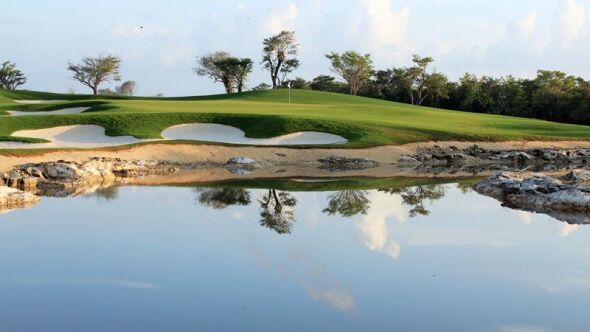
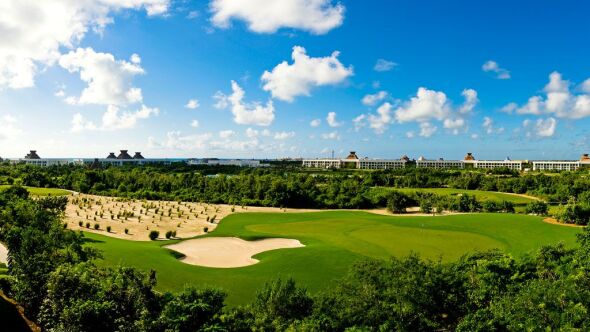
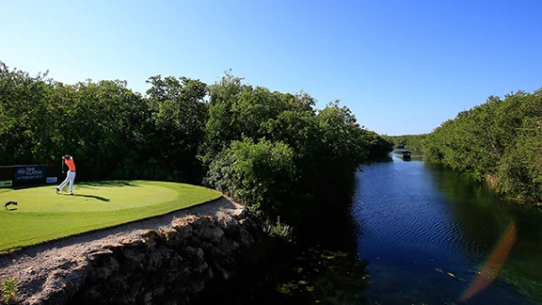
Operated by ClubCorp International, this Nicklaus Design Group course cuts through raw jungle and is surrounded by the island's native, natural habitat. It is a beautiful and challenging course featuring undulating greens of hybrid Bermuda turf, picturesque tee boxes and fairways, all surrounding a mangrove framed lagoon. With over 60 bunkers and water on 14 holes, the par 72 Cozumel Country Club course winds its way through the jungle and around the native mangroves, offering a substantial challenge for the experienced golfer while providing an enjoyable round for the not so serious. Four sets of tees, with yardages of 4900 to 6800 from the tips, allow golfers of all skill levels to enjoy their round. Plus, to enhance your golfing pleasure and privacy on this tropical island course, it was designed so that there are only three areas on the course where golfers on other holes are visible. But, while other golfers may not be visible, you can expect to see an abundance of native wild life including iguanas, lizards, wild pigs, turtles and yes, even crocodiles.
The Cozumel Country Club is a full service resort facility featuring a two-tiered practice range with putting green, chipping green and practice bunker. Additional amenities include overnight bag storage, beverage carts, restaurant and snack bar, Nicklaus Air Bear rental clubs and Footjoy rental shoes, a fully stocked pro shop, plus golf instruction and assistance from a qualified and friendly staff of PGA Professionals.
Located
just 15 minutes from the international pier and 10 minutes from the Cozumel
airport, The Cozumel Country Club is convenient and easily accessible for island
resort guests as well as cruise ship passengers. Our group of golf publishers
stayed at the Playa Azul resort, a charming Mexican -style boutique hotel located
right on the beach. Resort managers Fernando Beristain and Martha Nieto live
on-premises and treated us (and all guests) like family (including joining us
for meals!). Their hospitality seemed to reflect the ambience of the island
as we were warmly welcomed everywhere we went.
Like the island resort hotels, most of the major cruise ships visiting the island also have special golf packages for passengers wishing to embrace the island's stunning natural habitat while getting in a memorable 18 holes. Make sure you check with your travel agent, cruise ship or resort destination prior to booking your trip to take advantage of this great golf opportunity.