Short game before long to build consistency
 By Jason Sutton,
 Contributor
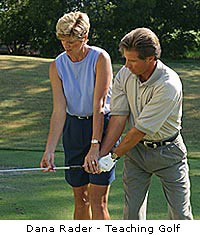 The short game or the feel shots around the green and putting tend to be the most difficult to regain sharpness after a long winter or layoff from golf.
I feel that this is the first area to attack when you start to practice.
The advantages of building your game back up from the hole and working backwards is countless. The obvious high percentages of shots, some 60 percent that are taken within 100 yards during a round of golf are not the only reason. The short game or the less that full shots can help the not only the mechanics but the rhythm and tempo of your full swing.
When I am teaching short game, the most prevalent errors often come in the decision-making process instead of the execution of the shot itself. The decision process is comprised of what type of shot to hit (high or low), what club to use, and how to set up to achieve this. This installment is what I feel is important in the short game as you start to get ready for the golfing season.
Short game tip: Making sound decisions
Visualize: Can you see the proper shot for the current situation?
Jack Nicklaus called this technique "going to the movies". He never hit a shot that he didn't see in his mind first. This is very important in starting phase 2.
Recognize: Club selection for the shot at hand. A higher shot such as a lob or pitch would need a more lofted club than a chip and run, which would need less loft.
Execute: How set-up and ball position in your stance have to match the shot your trying to play.
Low shot: Position your sternum in front of the ball (weight shifts to the front of stance, about 80 percent). Ball is placed even with your rear foot.
High shot: Position sternum even or slightly behind the ball (weight only 60 percent to front of stance).
When making your decisions on what shot to play, always play the lowest shot possible with the highest percentage of success. Never play a shot that you haven't practiced just because you saw a tour player do it on TV. Putt, Chip, Pitch, and then Lob in that order to higher rates of success.
Short game tip: The mechanics
Solid Contact on the middle of the clubface is paramount to being great with your wedges and around the greens. Without a solid impact condition, direction and distance control is not achievable. Understanding impact is knowing that the handle of the golf club stays in front of the clubface as you strike the ball, never behind. This is the most common mistake players, a lead wrist that is bent and a shaft that leans away from the target.
After you have achieved a proper impact condition and solid contact, swing length controls the distance of the shot. I like to see the short shots be symmetrical in length. This means the backswing length matches the forward swing.
Think of a clock face. If your arms swing to nine o'clock in the backswing, stop at 3 o'clock on the forward swing. This is on a basic chip or pitch, specialty shots are the exception. Always keep it simple, nothing fancy.
Short game practice drills
 Hide the tee: Stick a tee in the top of your grip. Make practice swings and try to hide the tee behind your lead forearm. If you break down with your lead wrist, the handle will line up with your rear arm and the tee will be visible between your arms. Hit chips and pitches and check your finish to achieve a flat lead wrist and a bent rear wrist.
Stork drill: Hit chips, pitches and sand shots with your rear foot off the ground and up on your toe for balance. This places most of your weight on your front leg to give you a descending angle of attack, essential for solid contact. This is the best short game drill because most players hang back in an attempt to lift the ball in the air.
I would like to see golfers work on achieving a solid impact condition first then practicing different shots around the greens to develop your distance and trajectory control. Don't put the cart before the horse, work on impact first and the rest of it will be much easier. Remember, nearly 60 percent of the shots in a round are played within 100 yards so it this area the proper practice time. Plan your shots carefully and you will have great success. Good luck in shooting lower scores.
PGA Professional Jason Sutton is a Master Instructor at the Dana Rader Golf School in Charlotte, N.C. Jason has been honored as a leading teacher in the southeast by Golf Magazine. He teaches students ranging from beginners to top amateurs and tour-level players.
Golfers need to learn Ball Flight Laws for maximum swing self-correction
To improve your swing, you must know why the ball does what it does in flight. That way you at least know what really caused the errant shot and perhaps can make the correct fix. You must understand the simple Ball Flight Laws.
... full article »- Pay close attention to those practice swings
- What the PGA Tour pros know: The importance of having an effective pre-shot routine

Parshooters wrote on: Jun 28, 2010
Great article. The short game is the least amount of time spent in practicing.
Yet, it's the most important part of anyone's game. You can make up for a lot of mistakes from tee to green. Personally, I'm getting killed this year, because I don't have the time to commit to practicing. I've been shooting on the average 85, but most of my rounds have included 40 putts per round. I'm having troubles reading the lines on the greens.
I've even written articles about the golfing mindset when it comes to putting at: http://www.A-Zgolfswingmechanics.com
Reply