TOP PICK
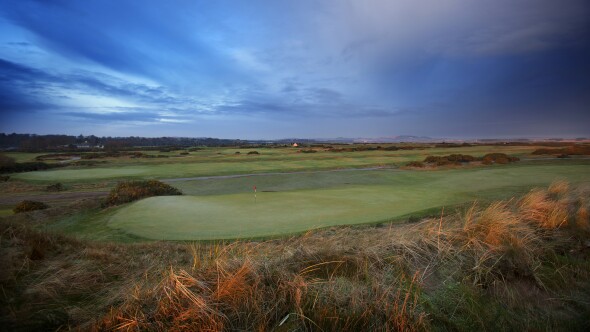
Fairmont St. Andrews - The Kittocks Course

Rating Snapshot


About
The Kitttocks is a long challenging course requiring nerves of steel with many holes running alongside the coastline.
Previously named Devlin Course.
| Tee | Par | Length | Rating | Slope |
|---|---|---|---|---|
| Blue | 72 | 7192 yards | 74.8 | 138 |
| White | 72 | 6752 yards | 72.8 | 134 |
| Yellow | 72 | 6327 yards | 70.9 | 130 |
| Red | 74 | 5904 yards | 73.0 | 130 |
| Hole | 1 | 2 | 3 | 4 | 5 | 6 | 7 | 8 | 9 | Out | 10 | 11 | 12 | 13 | 14 | 15 | 16 | 17 | 18 | In | Total |
|---|---|---|---|---|---|---|---|---|---|---|---|---|---|---|---|---|---|---|---|---|---|
| Blue M: 75.0/136 | 548 | 390 | 163 | 477 | 556 | 159 | 430 | 386 | 468 | 3577 | 334 | 586 | 425 | 212 | 450 | 462 | 185 | 502 | 459 | 3615 | 7192 |
| White M: 73.0/132 | 520 | 366 | 145 | 447 | 529 | 142 | 403 | 372 | 440 | 3364 | 320 | 556 | 413 | 187 | 428 | 428 | 171 | 445 | 440 | 3388 | 6752 |
| Yellow M: 71.1/128 | 504 | 345 | 125 | 423 | 504 | 119 | 381 | 351 | 414 | 3166 | 292 | 524 | 393 | 167 | 400 | 406 | 150 | 409 | 420 | 3161 | 6327 |
| Red M: 69.2/124 W: 73.4/130 | 476 | 317 | 112 | 388 | 487 | 100 | 358 | 327 | 381 | 2946 | 268 | 502 | 376 | 141 | 367 | 387 | 141 | 383 | 393 | 2958 | 5904 |
| Handicap | 9 | 13 | 17 | 1 | 8 | 18 | 7 | 12 | 5 | 14 | 3 | 10 | 16 | 6 | 4 | 15 | 2 | 11 | |||
| Par | 5 | 4 | 3 | 4 | 5 | 3 | 4 | 4 | 4 | 36 | 4 | 5 | 4 | 3 | 4 | 4 | 3 | 4 | 4 | 35 | 71 |
Course Details
Rentals/Services
Practice/Instruction
Policies
Food & Beverage
Bar, GrillAvailable Facilities
ClubhouseReviews
Reviewer Photos
-
This was after one hole Photo submitted by t768500482 on 01/03/2024
-
Photo submitted by AntoineDieulot on 08/21/2023
-
Photo submitted by u000008020777 on 08/19/2023
-
Photo submitted by u000008020777 on 08/19/2023
-
Photo submitted by u000008020777 on 08/19/2023
-
Photo submitted by MWright1872 on 10/16/2021
-
Photo submitted by MWright1872 on 10/16/2021
-
Photo submitted by t1038531706 on 07/01/2021
-
Photo submitted by t1422163496 on 05/23/2021
-
Photo submitted by Bobby2406 on 10/30/2020
-
Photo submitted by Bobby2406 on 10/30/2020
-
Photo submitted by Bobby2406 on 10/30/2020
-
Photo submitted by Bobby2406 on 10/30/2020
-
Photo submitted by Bobby2406 on 10/30/2020
-
Photo submitted by u054982877 on 07/27/2020
-
Photo submitted by Kilda on 07/21/2020
-
Fairmont St. Andrews (Kittocks), hole 7 Photo submitted by TimGavrichGP on 10/08/2019
-
Fairmont St. Andrews (Kittocks), hole 15 Photo submitted by TimGavrichGP on 10/08/2019
-
Fairmont St. Andrews (Kittocks), hole 17 Photo submitted by TimGavrichGP on 10/08/2019
-
Photo submitted by CraigLee46 on 05/12/2019
-
Photo submitted by JayCoffinGC on 08/09/2018
-
Photo submitted by JayCoffinGC on 08/09/2018
-
Photo submitted by t74799574 on 05/30/2018
-
Photo submitted by t74799574 on 05/30/2018
-
Photo submitted by t74799574 on 05/30/2018
-
Photo submitted by t74799574 on 05/30/2018
-
Photo submitted by t74799574 on 05/30/2018
-
Photo submitted by u404337360 on 05/27/2017

Solid scenic course
I played the kittocks for the scenery. If the weather is calm then it's a very forgiving course. Plenty of great views of the sea. Hole 7 was my highlight. Greens were in good condition. Scotland has had a rough winter with a lot of water. Many courses are extending mats but the kittocks was in great condition.
Course unplayable and dangerous
The St Andrews area had clearly had a huge amount of rainfall, with flooded fields and roads. We were due to play the Kittocks course but it was closed. “The Torrance is fine though” we were told. No it wasn’t, it was flooded, with mud up to the ankles and torrential rain falling. Finding relief from water was challenging, as was walking without risking a fall. The course clearly should have been closed.
We all felt robbed having wasted money travelling to St Andrews and playing a course in such awful condition. The Fairmont organisation need to take a look at themselves.
Course waterlogged
The course would be excellent on a good day but after weeks of rain the fairways are now saturated, a few of the holes with slopes are frankly dangerous
Definitely play but wait until winter passes
Friendly staff, very swanky clubhouse but expensive food
Good course in good condition
Course in good condition considering recent rain. Greens were rolling reasonably well. Overall, pretty happy
Fairmont Course
Good course, particularly interesting when high wind like today. Fairways are large enough to play with the wind. Nice to play, and challenging particularly from 16th.
12th is a tough with wind in front.
Fun to play
Fantastic
This is a reasonably priced course. The cart or buggy charge is steep at almost $70 but worth it. Played at 7am and was done by 10am. I know the goal isn’t to rush through the experience but it helped the pace of play. The scenery is gorgeous and people are awesome. Play this course.
Kittocks kicks you in the buttocks
Tough, challenging shot makers course… amazingly beautiful scenery…. Cannot wait to go back!

Stunning Views & Great Conditions
Views that rival Castle & Kingsbarns, long par 4s on back, hole 15 may be most beautiful we've ever seen. Only downside was no halfway house open at 5 and no dinner in spectactular clubhouse. Greens very nice.
This is a long course (best to play off the yellow tees for older players)
Try and keep on the fairways as the rough can be very tough. You have some spectacular views looking towards St Andrews
Good course.
Just a little wet in some places. In the summer months it would be fine.
Always good tho a bit wet underfoot
An enjoyable round and always a thrill to play despite me preferring the Torrance which overall is a better golf course IMO. It was surprisingly wet underfoot and very muddy in parts. Maybe I’d been spoiled on the links recently but having played the Torrance the week before I was a bit surprised. The greens are superb, fast and true this early in season but the course also needs a bit of TLC. It’s a big property but does look a bit tired in places especially the bottom half. I believe it’s to be upgraded and the Torrance will go. I’d much prefer it the other way around. All that said, the courses staff and overall experience is excellent. Always a pleasure to play.
Amazing Course And Extremely Cheap
Amazing course with unbelievable views and course layout. Summer greens and tees in use even on a cold winter morning and course in excellent condition for this time of year. Staff very friendly and sorted us out for coffees and breakfast rolls even at 7:30 in the morning.


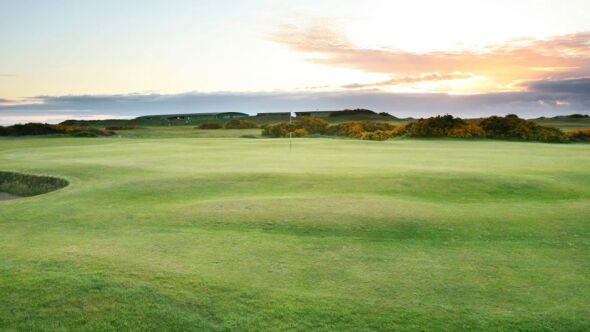


St Andrews Value Golf Package
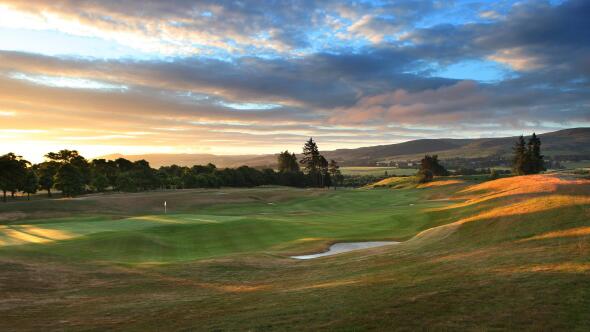
St Andrews Signature Golf Package

Ireland’s Best of the North West Golf Package
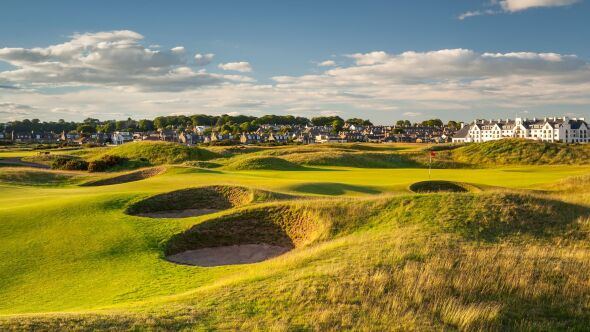
The Complete Scottish Coast to Coast Golf Tour